02. Taxonomy
The Problem
Things can no longer be contained in the social molds according to which they were primitively classified.
Bear with me for a quick thought experiment. What if I want to browse through some V-SHMUPs available for purchase? This is a prolific, decades-old genre that has at least dozens of different options on any given console, so it shouldn't be too hard... right? Wrong. It's maddening.
The Nintendo eShop website does have a "genre" tab, though the genres themselves are a strange blend of aesthetic style, subject matter, and gameplay:
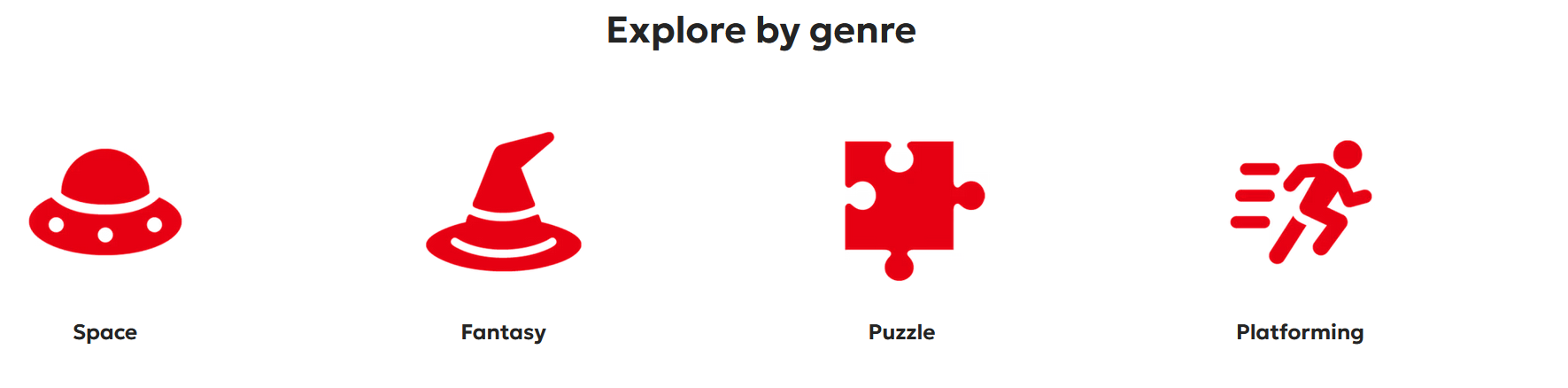
You could also just search some common terms (bullet hell or shmup, for example) but these will mostly only return shovelware that have either of those in their titles. The Steam Store handles this a little bit better, allowing developers to apply multiple tags to identify their games. But when everyone wants to be a bullet hell and there's no oversight, the term loses all meaning.
Publishers and storefronts are designed to sell products. This should not be conflated with authority on what categories are actually useful. As an alternative, the framework described below could be a possible route toward a more consistent system.
Classification
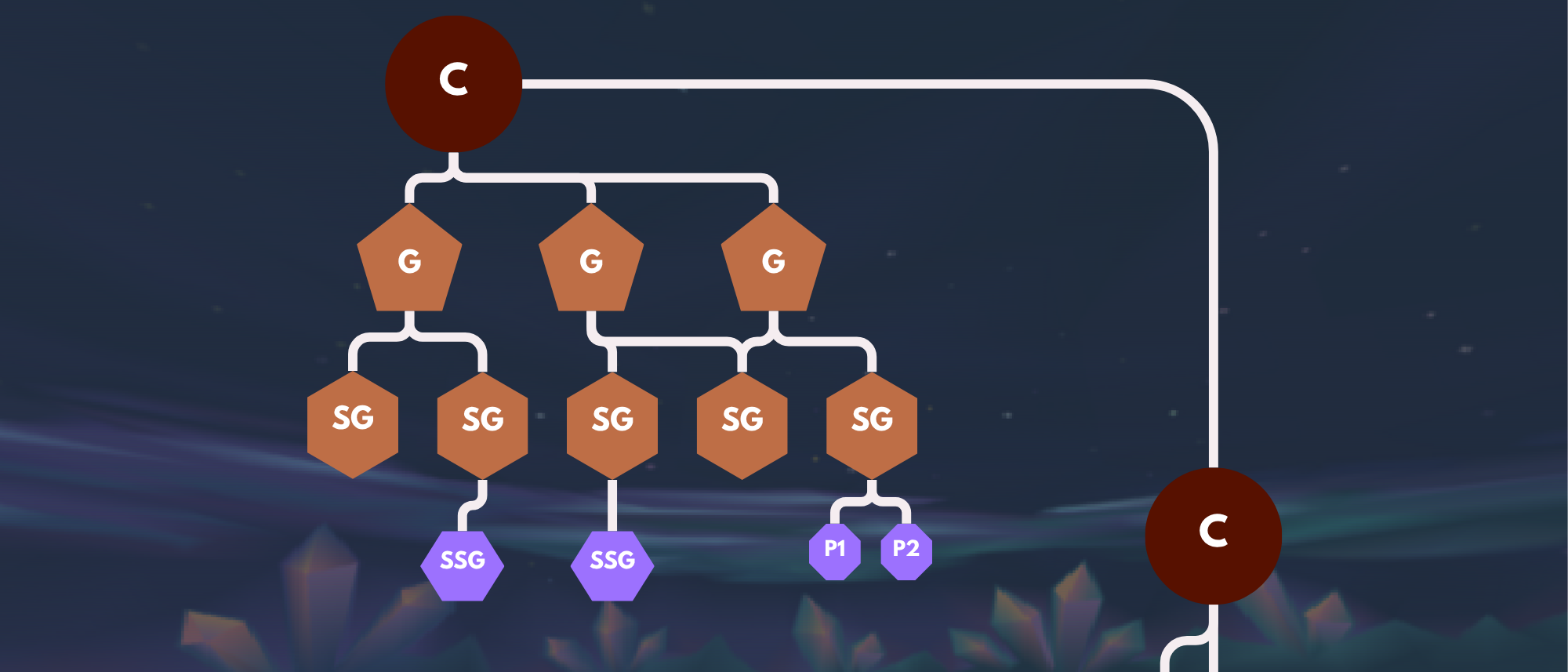
Class
Class, the highest category, is determined by the game's foundational objective.
- ex., the Arcade Class groups genres that emphasize perfecting a limited set of mechanics by reaching high scores in short bursts of a gameplay loop. Contrast that against Adventure Class genres, which may feature Arcade Class mechanics woven into a larger, narrative-based framework.
Genre
Genres are identified by a game's set of rules, or the boundaries that define how an objective is achieved.
- ex., games in both the Shooting and Brawling genres adhere to their parent Arcade Class objective of high scores. However, the way in which this is accomplished differs, with projectiles in one and melee attacks in the other.
Subgenre
Subgenres are the ways in which a game's set of rules are implemented.
- ex., once games have been narrowed to those where you shoot and dodge projectiles for a high score, they can be further broken down by how you do that. Fixed Shooters travel along a static axis, V-SHMUPs feature an autoscrolling playfield, and so on.
Super-Subgenre
Super-Subgenres may either similarly riff on an implementation or combine existing subgenres. These are typically not plentiful enough to form their own subgenre; however, they are still distinct as a unit.
Alternates
Finally, I should mention that while this taxonomy is centered around gameplay, people like to group games in a number of different ways. Sometimes, the lines are a little blurry anyway, with other elements of games affecting how they're played. The alternates described below all "spice up" or supplement a game's lineage. They function as tags, rather than as categories.
Pack
Packs are informal groupings for games that share deep ties, mechanically or otherwise. This is most commonly seen with sequels and spiritual successors, which form a franchise pack.
Perspective
Perspectives describe how gameplay is visually represented, which may or may not significantly impact the gameplay itself. In some cases, differing perspectives are merely aesthetic, where one game uses sprites and another uses models (see: Overhead Action-Adventure). Other times, mechanics may be exclusive to perspectives (such as moving between the foreground and background in 2.5D Linear Platformers).
- 2D: games that operate on a flat plane using sprites
- 2.5D: games that operate with multiple “layers” of 2D fields, often with 3D environments
- Isometric: games that emulate a 3D space using 2D imagery
- 3D: games that rely on polygonal models for a clear sense of depth, or distance, to the field
- Mixed: games that switch alternate between various perspectives
- VR: games designed specifically for virtual reality hardware, oftentimes in a first-person perspective that ties camera controls to the player’s real-life head movement
Modifier
Modifiers denote when games pull a significant number of mechanics from other genres/subgenres, though this is not done in a way that adjusts the underlying purpose. Think of how a platformer may have an RPG-like EXP system, or how versatile "Roguelite" elements are brought across genres.
Aesthetic
Aesthetics represent shared themes that extend beyond types of gameplay, including visual themes (e.g., Cel-Shaded) or vibes (e.g., Cozy).
Methods
So, what do you think so far? I know these theoretical overviews can slide into sounding super vague, but hopefully things click into place with some observation and practice. I would recommend poking around the Shooting Genre section, as it is the most developed at this point. However, I do also want to take a moment discussing the methods used to differentiate these classifying elements. This is where this website's namesake - Game Genealogy - comes in.
Of course, it's not hyperbole to say iterations and evolutions are this medium's bread and butter. The industry started with hardware clones, which were then slightly modified, and then there were modifications of modifications, and so on... This can make it difficult to figure out where the line should be drawn for a genre, as games that chart a new course could just be an outlier or create a league of its own. In fact, the infinite possibilities of game design make it impossible to pin something down at a glance. A game may appear to have all the visual calling cards of a platformer while actually playing like an RPG in practice.
Classification needs historical context. While it may not be an exact science, there are a number of questions that should unmask what family a game belongs to.
- What inspired it, and how does it compare? How was it perceived at the time?
- Who was involved with development, and what other types of games have they made?
We also need to look to a game's impact after release to determine if it starts a new branch.
- Do more games exist in this style, and are they made by other developers?
- Are any distinct mechanics now common that specifically came from this game?
This is ultimately a dynamic process that requires occasional reevaluation. Dark Souls was once an aberration before every third game molded itself as a "Souls-like."